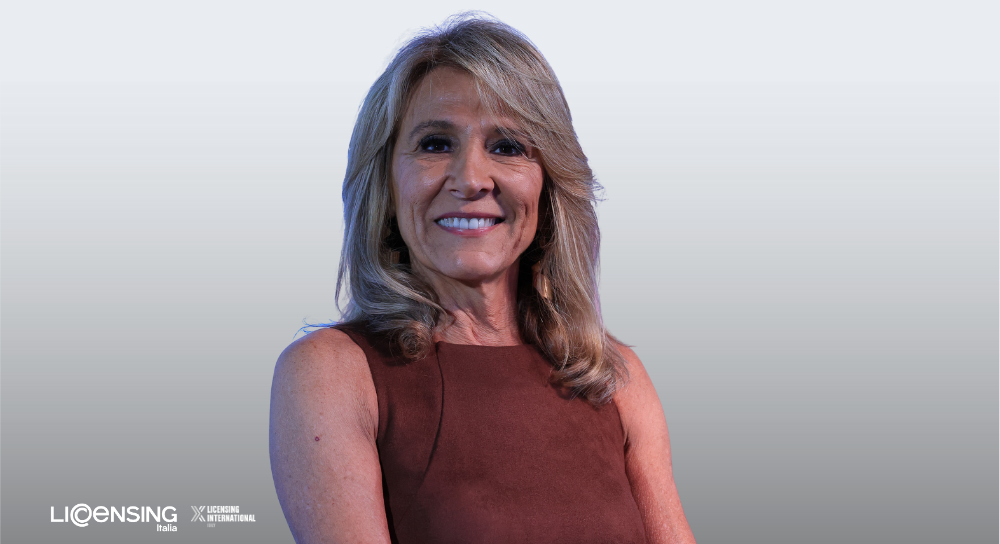
18Licensing Italia interviewed Marici Ferreira, CEO of EP Grupo and President of the Brazilian Licensing Association, to gather a first-hand perspective on how licensing markets in Central and South America are evolving.
From digital transformation and e-commerce to gaming and immersive technologies, and from the growing role of local IPs to Brazil’s strategic leadership, the interview offers a clear snapshot of the forces reshaping the Latin American licensing ecosystem, with a special focus on the upcoming LicensingCon LATAM 2026, the region’s leading industry event.
LI: What do you see as the most significant developments shaping the Central and South American licensing markets today? How is the LATAM market adapting in areas such as e-commerce, digital and social media content, gaming, and XR?
MF: The licensing markets in Central and South America are currently going through one of their most strategic phases of transformation, driven by three major forces: digitalization, channel diversification, and the maturation of brand and intellectual property consumption.
One of the most significant developments is the increasingly deep integration between licensing, digital content, and e-commerce. Brands are moving beyond a purely physical retail approach and embracing omnichannel strategies, with a strong presence across marketplaces, social commerce, and direct-to-consumer (D2C) sales. This allows for faster product launch cycles, more agile market testing, and greater offer personalization.
Within digital content and social media, we see IPs being created and strengthened directly on platforms—often before reaching physical retail. Creators, digital characters, streaming animations, and native social media formats have become new sources of licensable properties, expanding the traditional licensing ecosystem.
The gaming segment also plays a central role in this transformation. Games are no longer just product categories; they have become powerful platforms for brand building, engagement, and transmedia consumption. Licensed brands within games, collaborations with studios, and hybrid physical-digital experiences are increasingly present across Latin America.
Immersive technologies such as XR (augmented, virtual, and mixed reality) are beginning to gain traction, particularly in marketing campaigns, brand activations, and point-of-sale experiences. While still in a gradual adoption phase, these technologies already show strong potential for enhancing storytelling, engagement, and conversion.
Overall, the Latin American market is adapting with greater agility, a stronger data-driven mindset, direct consumer relationships, and tighter integration between content, product, experience, and community. Structural challenges still exist—such as logistics, informality, and unequal digital access—but progress is consistent, and growth potential remains highly significant in the coming years.
LI: How would you assess Brazil’s current position and influence within the broader region’s licensing ecosystem?
MF: Brazil holds a central and strategic position within the Latin American licensing ecosystem, which generated US$15.704 billion in retail sales in 2024, according to the Licensing International’s Industry Study 2025.
It is the largest market in the region, exerting strong influence over trends, launches, and expansion strategies. Its strength stems from the scale of consumption, retail diversity, the advancement of e-commerce, and the increasing maturity of industry professionals. Brazil has also expanded the creation of local IPs with regional and global potential, establishing itself as the main licensing hub in Latin America.
LI: What are the major retailers in Brazil, and how are they adapting their strategies?
MF: Among Brazil’s largest and most influential retailers are Carrefour Brasil—leader in national retail revenue; Magazine Luiza (Magalu)—strong in department stores, home appliances, and electronics, with growing digital leadership; Via Varejo—owner of traditional chains such as Casas Bahia and Pontofrio, currently reinventing itself in e-commerce; and Americanas—long-established in department retail with a strong online and marketplace presence. Amazon and Mercado Livre also stand out, with Mercado Livre being the absolute leader in the marketplace and integrated logistics model in Brazil.
Overall, Brazilian retail has focused on expanding proprietary marketplaces, integrating physical stores with online channels (omnichannel), and intensifying the use of apps, technology, and modern logistics to meet increasing digital demand.
To compete with global giants and digital platforms, retailers such as Magalu and Via Varejo have made acquisitions of startups and technology and logistics companies, strengthening their marketplace, delivery, payment, and services infrastructure. A recent example is the strategic alignment between Magalu and Americanas, aimed at increasing competitiveness against Mercado Livre.
At the same time, Brazil has seen growing competition from Chinese e-commerce platforms such as Shein, Shopee, and Temu, which have intensified price competition through aggressive pricing, vast product selection, and strong digital execution.
The most effective strategy today combines omnichannel + marketplace + e-commerce + efficient logistics, enabling companies to respond more quickly to changes in consumer behavior and escalating global competition.
Brazilian retail chains are also expanding their product mix, investing in private labels, licensed brands and characters, and strategic partnerships, which facilitates the introduction of licensed products, collectibles, and special collaborations. With the growth of digital consumption, there is greater room for fast launches, limited editions, and niche products—strengthening the licensing and collaboration model between IPs and retailers. Physical stores remain relevant, however: according to 2024 data, major retailers continued opening new locations while expanding their offline operations alongside digital growth.
LI: Which properties or categories have been performing best across Brazil and LATAM, and what consumer trends are driving this success?
MF: Strong performance has been led by a mix of entertainment, nostalgia, lifestyle, and accessible consumption, driven by new digital dynamics and the search for emotional connection with brands.
- Animation, series, and films: Global IPs such as Stranger Things, Marvel, Disney, Pokémon, and Dragon Ball continue to perform strongly across toys, apparel, collectibles, and stationery.
- Games and e-sports: Minecraft, Fortnite, Free Fire, and Nintendo franchises are growing rapidly in licensed products.
- Kids and preschool: Stable categories, with strong demand for educational characters and high-turnover retail items.
- Nostalgia and retro: Brands from the 1980s, 1990s, and 2000s are experiencing a resurgence, especially among young adults.
- Lifestyle, fashion, and licensed beauty: Collaborations between IPs and consumer brands are growing significantly.
- Local and regional IPs: Brazilian and Latin American characters and brands are gaining greater visibility, particularly in digital environments.
Growth is driven by the intersection of content, emotion, pop culture, retail digitalization, and new forms of brand engagement, with particular momentum in entertainment, gaming, and lifestyle.
LI: How do Brazilian and LATAM-originated IPs compete or collaborate with global brands?
MF: IPs originating in Brazil and Latin America are playing an increasingly strategic, complementary, and competitive role alongside global brands—both competing for consumer attention and collaborating through hybrid models.
On the competitive side, local IPs stand out due to strong cultural connection and regional identification, creative agility that allows for faster response to trends, and more accessible licensing costs.
At the same time, collaboration with global brands is increasing through strategic co-branding and collabs—combining international reach with local relevance; audiovisual co-productions, especially in animation and digital content; adaptations and localization of global IPs tailored to Latin audiences; and partnerships with regional influencers who evolve into IPs themselves, connecting content, products, and experiences.
A recent example is Lemon Slayer, a parody of Demon Slayer created by Turma da Mônica (MSP Estúdios).
Today, the relationship between LATAM and global IPs is less about direct competition and more about strategic complementarity. Global brands move closer to local culture, while regional IPs gain scale, international visibility, and access to new markets.
LI: Do you believe there is room for new IPs to break through in Brazil, and what qualities help a newcomer succeed in such a competitive environment?
MF: Yes, there is real room for new IPs to stand out in Brazil—especially in a market increasingly open to innovation, diverse narratives, and digitally driven consumption. Despite being competitive, the Brazilian environment is fertile due to the strength of communities, creators, and the fast adoption of trends.
New IPs succeed when they combine creative flexibility, clear market strategy, strong digital execution, and emotional connection with audiences. Brazil remains one of the most favorable markets in Latin America for creating, validating, and expanding new brand universes.
Brazilian consumers are highly attuned to global trends, especially when adapted to local creative culture. Brands must be flexible enough to engage in memes and deeply connect with local cultural dynamics.
LI: The LicensingCon event is the place where the whole Latin American licensing community gets together. Tell us about the next edition.
MF: LicensingCon is the leading licensing industry gathering in Latin America. We have been organizing this event for 18 years in São Paulo. The 2026 edition will be even larger and more dynamic, offering expanded space and greater opportunities. Save the date: August 12–13, at Transamerica Expo Center, São Paulo.
The event will feature brand booths—some already confirmed include Warner, Miraculous Corp, Paramount, Sanrio, Mattel, Ubisoft, Universal, and Globo—as well as a main stage for talks and trend presentations, brand activations, experiences, and extensive networking areas.
LI: Why should international companies and professionals consider participating in LicensingCon LATAM, and what unique advantages does the event offer to newcomers?
MF: LicensingCon LATAM offers clear and practical advantages:
- Direct access to decision-makers from Brazil and across Latin America, shortening prospecting and negotiation cycles.
- Real insights into the local market, with content focused on consumer behavior, retail, distribution channels, and regional business models.
- Curated, high-quality networking that enables strategic connections beyond traditional commercial interactions.
- An ideal environment for testing and validation, allowing international brands to assess IP receptivity before broader expansion.
- Strong integration between content and business, connecting talks, creative hubs, and the exhibition area in a results-oriented format.
- Presence of both regional and global IPs in the same space, fostering partnerships, co-productions, and collaborations.
In addition, the event positions itself as an intelligence, relationship, and opportunity-generation hub—reducing cultural and operational barriers for companies entering Latin America. For new professionals, it offers a safe, efficient, and strategic way to understand the market, build reputation, and accelerate business in the region.
LI: Looking ahead to LicensingCon LATAM 2026, what themes, categories, or business opportunities do you expect to dominate conversations?
MF: Discussions will be driven by themes reflecting the convergence of content, technology, experience, and new consumption models, with strong emphasis on monetization, performance, and regional expansion.
Key topics include artificial intelligence applied to licensing and IP creation; games, e-sports, and immersive universes (XR) as core platforms for building brands, products, and licensed experiences; the creator economy and social-born IPs, with influencers becoming multi-platform intellectual properties; tighter integration between entertainment and retail, focusing on hybrid experiences, live commerce, and social commerce; and licensing expansion into lifestyle, beauty, food, and wellness—extending IPs beyond traditional categories.
In terms of categories, entertainment, gaming, fashion, beauty, stationery, toys, experiential activations, and digital products are expected to lead. Business opportunities will center on cross-licensing projects, brand–creator collaborations, international expansion of regional IPs, and new digital monetization models.
In summary, LicensingCon LATAM 2026 will be defined by applied innovation, new IP formats, technology-driven experiences, and sustainable growth across the creative market.
Marici is President of the Brazilian Licensing Association / Licensing International and CEO of EP Grupo, organizer of LicensingCon.