
B.Duck has grown from a simple, highly recognizable character concept into a lifestyle-driven IP universe. Its strength lies in the balance between a clean visual identity, optimistic emotional appeal, and strong adaptability across consumer products, digital touchpoints, location-based experiences, and cross-brand collaborations.
LI: From your perspective, what makes B.Duck different from any other duck character out there, and what has allowed it to become a globally relevant brand today?
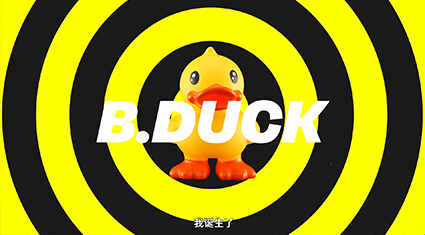
VC: B.Duck started not as a commercial licensing project, but as a personal story. Our founder, Eddie, designed the character for his newborn son in 2005. That emotional origin gives B.Duck a warmth and authenticity that is hard to replicate.
Unlike many character IPs that first rely heavily on animation or publishing, B.Duck grew through product design and licensing. From the beginning, our visual identity was built to work across categories. We also benefited from an early cross-category strategy: B.Duck was not just a character, but a lifestyle brand appearing across apparel, accessories, home goods, toys, and even food and beverages.
This allowed us to build awareness through physical product presence rather than relying solely on screen content. Today, that same product-first DNA, combined with our distinctive brand yellow colour and playful personality, makes B.Duck instantly recognisable across more than 30 markets.
LI: How has the brand grown over the past few years?
VC: The past few years have been a period of significant structural transformation for B.Duck. We have moved from being primarily a Greater China-focused brand to a truly global licensing operation. Key growth vectors include:
Location-Based Entertainment (LBE): Our Central World Bangkok events have demonstrated the power of immersive experiences. The 2025 campaign attracted strong visitor numbers, generated significant ticket revenue, and delivered substantial media impressions. This has become a blueprint for our LBE expansion into other markets.
International licensing expansion: We have built partnerships across Europe, including Italy and Spain/Portugal; the Americas, including the United States, Brazil, and Mexico; India; and Southeast Asia, including Thailand, the Philippines, Vietnam, Indonesia, and Malaysia.
Strategic IP x IP collaborations: We have been expanding the B.Duck brand universe through cross-IP collaborations, including with the British Museum for cultural heritage-themed product collections and Monchhichi for cross-character merchandise. These collaborations allow us to merge B.Duck’s playful identity with other beloved IPs, creating fresh product stories and reaching new audiences.
Digital and Web3 exploration: We have begun exploring digital engagement through community-driven fan initiatives, including gamified collectibles and digital projects tied to major sporting events.
LI: How would you describe the current positioning of the B.Duck brand in Asia and in other areas of the world? What makes it distinctive in the character licensing market?
VC: In Asia, B.Duck is a mainstream lifestyle character brand, particularly in Greater China and Southeast Asia, where we enjoy strong recognition across demographics. Our positioning sits at the intersection of cute and fashionable: accessible enough for mass-market licensing, but with enough design sophistication for premium collaborations.
Outside Asia, we are still in an emerging stage, building awareness, establishing distribution, and proving our retail appeal. Markets such as Europe, the Middle East, and Latin America are showing early but promising traction.
What makes B.Duck distinctive in the character licensing market is fourfold. First, colour identity: our signature yellow is one of the most distinctive brand colours in the licensing industry. Second, category breadth: from high-end fashion collaborations to mass-market consumer goods, B.Duck licensees span an unusually wide range. Third, no animation dependency: unlike many character IPs, B.Duck did not need a TV series to build its brand; our product ecosystem is part of our content. Fourth, generational reach: we appeal to Gen Z and Millennials through fashion and lifestyle, while also connecting with Gen Alpha through our playful, colourful aesthetic.
LI: Which product categories are the most suitable for B.Duck, and why? Are there categories where the brand performs particularly well?
VC: B.Duck’s visual identity and brand personality make it unusually versatile across categories. Our strongest performing categories include:
Apparel and accessories: T-shirts, hoodies, bags, hats, and socks. This is one of our most mature categories and a primary entry point for many consumers.
Toys and collectibles: Particularly plush toys, blind boxes, and collectible figures. B.Duck’s character design translates naturally into 3D product.
Home and lifestyle: Home decor, kitchenware, bedding, and stationery. B.Duck’s warm, cheerful aesthetic fits naturally in home environments.
Food and beverage: Cafes, packaged snacks, and drinkware. B.Duck is highly suitable for F&B licensing due to its friendly, family-friendly personality.
Location-Based Entertainment: Pop-ups, theme parks, and immersive experiences. This is one of our fastest-growing categories and has strong potential for high-value consumer engagement.
Digital and electronic accessories: Phone cases, earphones, and charging devices. We see meaningful relevance here, including among male consumers.
The categories that work best for B.Duck share a common thread: they allow the brand’s visual identity and optimistic personality to shine through the product itself. B.Duck is not a logo-slap brand; the character is part of the product design.
LI: What have been the most relevant licensing activations and brand collaborations of the past few years?
VC: Some of our most impactful activations and collaborations include:
B.Duck x Central World, Bangkok 2025: A landmark LBE activation featuring large-scale installations, rides, carnival booths, extensive media and KOL participation, and strong consumer engagement. This has become an important blueprint for our LBE approach in global markets.
B.Duck x British Museum: Cultural heritage-themed product collections that merge B.Duck’s playful aesthetic with iconic museum artefacts.
B.Duck x Monchhichi: A cross-character collaboration bringing together two beloved character brands.
B.Duck x CityFuns: Retail stores and family entertainment centres across multiple countries.
Digital collectible and fan engagement projects: Selected projects exploring community-driven digital content and new forms of fan participation tied to major cultural or sporting moments.
International partnerships across Europe, the Americas, India, and Southeast Asia have also helped establish B.Duck as an emerging global character brand.
LI: Looking at international development, which territories currently show the strongest potential for B.Duck, and where do you see the next growth opportunities?
VC: Our current strongest territories include:
Greater China, including Mainland China, Hong Kong, Macau, and Taiwan: This is our home market and most mature region, with the highest brand awareness and broadest product distribution.
Southeast Asia, including Thailand, the Philippines, Vietnam, Indonesia, Malaysia, and Singapore: This is one of our fastest-growing regions. Thailand in particular has been a standout market, supported by Central World activations and strong local partnerships.
Europe, including Italy, Spain, and Portugal: These markets are still at an early stage but show promising potential as we establish representation and distribution.
The Middle East and India: These are under active exploration.
Next growth opportunities include North America, Latin America, and Eastern Europe. North America is the world’s largest licensing market, but also one of the most competitive, so we are taking a measured approach through e-commerce and content-first strategies. Latin America, including Brazil and Mexico, has strong cultural affinity for character IP. Eastern Europe remains relatively untapped but has potential.
Our international strategy is partner-led, not branch-led. We work through local licensing agents and master licensees who understand their markets. This allows us to scale without the overhead of full local operations.